Showing posts with label Different cultures. Show all posts

The Budayeen trilogy - George Alec Effinger

***** The series that made me revalue cyberpunk

Cyberpunk is a genre with which I have never had great affinity. My previous attempts to read it (“Virtual Light” by Gibson and “Feersum Endjinn” by Banks) failed in impressing me, though, ironically, I have ventured into writing (also) this sub-genre of science fiction. In short, I suspected that the problem wasn’t the sub-genre in itself, but that I had come across the wrong titles, at least for what concerned my personal tastes. In fact, I have always had a lot of fun in reading more recent books in which the cyberpunk element was important but not dominant (as the Void Trilogy by Hamilton).
Luckily, when I started reading Effinger’s books I had no idea of ​​being in front of one of the fathers of cyberpunk in its period of greatest development, the 80s. This shows how the labels sometimes do more harm than good. I had only two books of the series, which I got at different times, without even knowing that they were connected. As soon as I started reading the first, and I was captured by it, I immediately strove to find a copy of the third, because I knew I would’ve needed it very soon.
Having read all of them in a row, I decided to review them together, because it’s hard to judge them separately without being influenced by previous or subsequent readings.

The Budayeen trilogy (it would be more correct to call it a series, since the author had planned at least two more books, which unfortunately he had no time to write before his death) is not only cyberpunk. The story is set in two centuries, in a rough neighbourhood, the Budayeen, in an unspecified city in the Arab world. In the future imagined by Effinger people get their brain “circuited” to be able to insert some modules that provide the individual with new knowledge, skills, and even personalities. The cyberpunk element is provided by this technology, which is in fact one of the few science fiction elements in the story. Here science fiction is just a tool to tell the story of the characters and especially for much of the first book (but also for large parts of the others) the same story would work just as well if told in a context outside of speculation fiction.

Regarding now, thirty years later, this imaginary future, it appears full of anachronistic elements, like an alternate universe or just a universe outside of time.
The Budayeen is actually a metaphor for the French Quarter of New Orleans (Effinger had never hidden that), with its nightclub, where it seems it’s quite difficult to find a woman who is genetically such, and with its organised crime. Added to this is the exotic touch of having inserted it in the Islamic world, which is represented accurately with all its contradictions, even more evident when imagined in two hundred years. The relationship of the characters with the Islamic religion, the respect towards it, accompanied with the most illegal actions is a smart reference to the contradictory but sadly real Catholicism-mafia binomial, which cannot help but make you smile. It’s a little like saying that in the future, while changing the people, places and even religion, the results you get are always the same.

Beyond this setting, the novels by Effinger all revolve around the figure of the protagonist, Marîd Audran, a private detective, who is a drug addict, a cautious (not to say cowardly), flawed, but very human character, trying to make ends meet by doing more or less legal chores, between a hangover and the other, supported by various kinds of pills (depending on the occasions: for sleeping, against anxiety, for staying awake, and so on), and risking to be killed at any moment. In all this Marîd, who tells his story in first person, never loses his self-deprecating humour, even in the worst situations. In short, he is a likeable rogue, indeed a very nice antihero.
I laughed so much in reading these novels, but what makes them so good is their unpredictability. Effinger doesn’t follow patterns. The story is realistic thanks to the way in which events happen almost randomly, just like in real life, without logic. You never know what will happen in the next page and you cannot help but keep reading. So every day I found myself waiting with trepidation for the time when I would go to bed and pick up the book.

Marîd slips into a mess after another. When you think it couldn’t become worse than that, well, it becomes worse. But for better or worse he pulls himself out, meaning that he survives.
In the first book he investigates some murders, tries to prop up his affair with the beautiful dancer Yasmin (of which he is very much in love), who hasn’t always been a woman, tries to avoid ending up under the control of Friedlander Bey, the “mafia boss” of the Budayeen, and of course not to get killed.
In the second one he finds out about an obscure program, called Phoenix, because of which many people are killed, and finds himself working with the police.
In the third one he ends up in exile in the Arabian Desert, where he lives for a while with the nomads. This book seems almost split in two, with one part set in the desert and another in the Budayeen that are completely separate.

Effinger was a great author and this is proved by the skill with which he used the various narrative techniques.
One thing I particularly liked is the narrative device which shows us the scenes where Marîd is wearing a personality module (called moddy). Suddenly it goes from first to third person, creating a distance between the reader and the character that simulates the feeling that the latter must have while the control of himself is filtered by a software, while his consciousness is almost put aside, as if he were a spectator. In reading these scenes you really have the impression of living in a kind of altered state, a bit as it happens to Marîd himself. Especially fun is when the protagonist tries a moddy of Nero Wolf and feels more fat and totally uninterested in women.
The same trick is used in the two scenes set in virtual reality (in the second book), while Marîd and Chirinda are playing a game. The scenes do not make the plot advance, but Effinger wrote them anyway and they are still very enjoyable just because of the feeling of “filtered participation” they give and that distinguishes them from the rest of the novel.
Another aspect that I appreciated is the tendency of the author to show Marîd at some point in the story and then make him put the pieces together, often overshadowed by his memories, of what happened before, with a transition to a flashback that imitates the way with which memory works. Marîd goes back in thoughts and shows us everything that happened, even for many pages, up to the point of apparent tranquillity from which the chapter has started. So little by little we finds out that he is in a big trouble from which it is impossible to imagine how he will manage to come out. Often this realisation is followed by a plot twist that worsens even more things for him, if possible.

Due to the absence of patterns and for the thin vein of imperfection that crosses all the books, each of them is characterized by a melancholic or bittersweet ending, but which is always open. And, given that Effinger died before writing the books that followed, these endings entitle us to imagine what happens next.
In this regard, I would add that there is a posthumous collection of short stories, “Budayeen Nights” (I’ll review it separately), which includes a series of writings by Effinger including the beginning of the fourth book, and above all a story starring Marîd (although his name is never pronounced) that allows us to take a look at his future where apparently he has freed himself from the control of the “mafia boss” of the Budayeen and has a fairly quiet life, even if sometimes he gets involved in dangerous investigations.
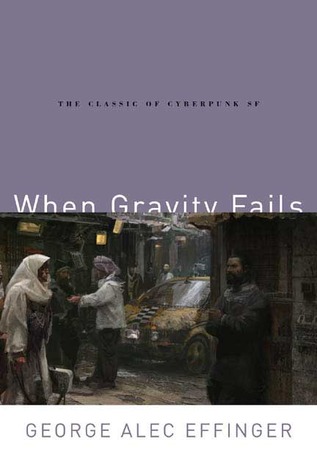
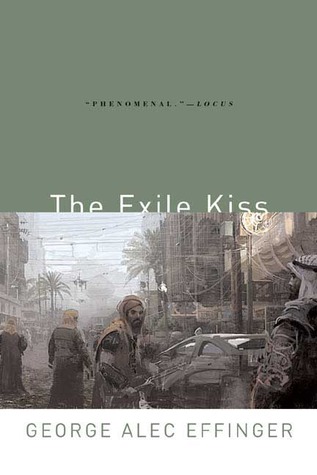
The three novels in the Budayeen trilogy are: “When Gravity Fails”, “A Fire in the Sun”, and “The Exile Kiss”.
If you have the opportunity to get them, don’t miss it.

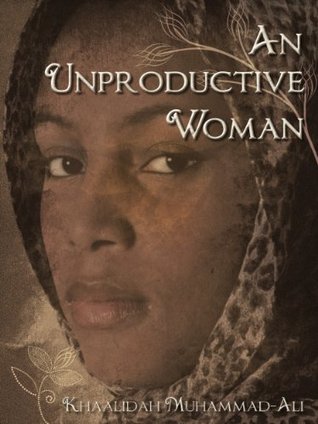
An Unproductive Woman - Khaalidah Muhammad-Ali

*** Fascinating but disappointing

I’m always attracted to books set in distant places and whose protagonists live cultures very different from mine. These are stories that open you mind, which teach you to see what is different and to respect it, even if it appears alien and contrary to the way we see, to what we consider to be right. And, being a women, I like the stories of this kind told from the point of view of a woman, which often lead me to note that, although the differences, however, there are points in common, which are universal.
With these expectations, I ventured into the reading of “An unproductive Woman”. From the title you can imagine what it is about. It is the story of a woman who cannot have children, but at the same time it is much more complex than that.
It is set in Senegal, in a Muslim context, with a figure of a woman seen as the mother of children, and in situations of polygamy in which often the husband is much older than his wives.
It’s already a difficult subject to deal with for a western woman, but it has its own charm. It’s interesting to learn the way of thinking of those women for whom it is normal to marry a man much older than them, for whom the presence of other wives is something that can happen, though they do not like so much the idea, but they tend to adapt anyway. It’s interesting to see this type of family dynamics and all the problems of jealousy, quarrels, and fights that can be observed.
I must specify that we are not faced with situations that involve abuse. The women told in this novel are women free to do what they want. The only limits they have are those dictated by their own mentality.
The book is very well written, the evocative style of the author takes you inside the head of these women and their men.
Yet I was not satisfied.
The plot was complex enough and had interesting ideas. Adam after having lived a long time in America where he had a wife and a son, he returned to Senegal for “duty”, because his family, who knows nothing of this wife and this son, wants him to take a wife in his country.
And he does so. And then he spends the rest of his life in regret of having lost his son. Yes, you read that right, just his son, not because he has abandoned his family.
The reason of his repentance is only that his new young wife, Asabe, does not seem to be able to give him any child, let alone a son. Otherwise it seems obvious that he would never regret it.
While Adam struggles to find a wife capable of this, a series of misfortunes, deaths, births of daughters, diseases and so on would prevent him from achieving this dream. Here the irony of fate, or karma, or his own God is punishing him for his behaviour. And this is perhaps the most balanced aspect of the story.
In the meantime Asabe, who knows nothing of his past, continues to love him and suffers his wish that she cannot fulfil. While the lost child as an adult discovers that his father was looking for him.
This has the potential of a great drama and, instead, will deflate in a vapid doing good-ism which is really hard to swallow.
There is no true repentance where it should be, and there is forgiveness where seems quite impossible that there is.
Honestly I do not know if the story could be realistic. Being western, it doesn’t seem so to me, but if I try to open my mind to other cultures I give it the benefit of the doubt and say that maybe the suspension of disbelief might have endured.
But this does not prevent the existence of two really disappointing aspects.
The first is the attempt to present a controversial situation and then to bend it to the conformism of the environment in which it develops. In all this, where is the growth of the characters? There is not. They are all static, firm on their convictions, or worse, they tend instead to regress. The reconciliation is disarmingly predictable.
In real life I suppose that it can happen, that people let it go for a quiet life, forgive, go ahead. But this is fiction. If the conflict in fiction does not lead to a growth and an unexpected resolution, the facts are twofold: it does not work leaving the reader puzzled or simply bored because it does not offer anything new.
The other aspect that I just cannot accept is this image of the woman whose only thoughts are to have children, take care of them, her husband, their feelings, gossip, jealousy ... etc ... and only these things. Despite the novel enters the detail in all these aspects, even telling the daily lives of these women, never once a slightest interest in any other subject manages to shine in them. Aside from perhaps Asabe, that we see sometimes tending the garden (but it seems more like a contour), is it possible they don’t have other interests in life? And, mind you, I’m not talking about a family living in conditions of poverty in which women cannot afford “frivolousness” (obviously it isn’t really frivolousness, since the interests of a person define their essence), anything but that. Adam is an entrepreneur. His wives have everything they need. I understand that they traditionally deal with “women” matters, okay, but other than that ... nothing. Or they are just plain boring women (all?) or, as I think, the author decided to show characters whose continuing concern is to get the attention of a coward and selfish man. It almost seems that hers is a provocation against the Western world in which she lives.
Nothing will convince me that such a thing could be realistic. And unfortunately, although I can appreciate her intent, I’m disappointed, because, in a nutshell, I don’t buy it.

An Unproductive Woman on Amazon.com.

The Good Muslim - Tahmina Anam

***** Fascinating, engaging, bitter

I admit to being fascinated by books that narrate stories away from me, not only from a geographical point of view, but especially culturally. This novel by Tahmina Anam, which tells of Bangladesh in the 80s (with some small glimpse of the 70s), is one of those books that eventually attracts me right from the cover and from the promise of an “exotic” story than this suggests. Only when reading it I discovered that it was the second book of a trilogy, but you can easily appreciate it without having read the previous one.
As always, when I face these stories, I feel mixed feelings. I have a tendency to want to find inside them some references that somehow recall what I know. In this sense, I immediately identified with the character of the protagonist, Maya, a modern woman, close to our Western idea of a woman, despite being showed in distant country and in a relatively distant time (thirty years are many). Beside her are small details, like her mother watching “Dallas” on TV, exactly as I did in those days as a child.
The rest is largely different, almost alien, and sometimes disturbing. Her brother, who became from atheist to religious fanatic, after the war, closing stubbornly back into his world, drawing his son Zaid into it, makes you angry. His way of being deaf in front of his loved ones makes you upset and curious, since it leads to wonder why he has become so, and along with the protagonist you still want to find in him a glimpse of the man who had been before. The desire, never satisfied, to understand what goes into his head is with you for most of the book.
And then there are the personal and sentimental vicissitudes of Maya representing the only comforting aspect of this story when you come to its conclusion.
Everything is shown with an intense and evocative prose, combined with a game of flashbacks that like pieces of a puzzle reconstruct the story of Maya and Soheil, against the backdrop of a distant country, difficult to understand and imagine, in a merciless reality where there is no place for a happy ending, but only hope.
Although I read this book with great pleasure, although I got carried away with ease by its words, and although I decided to give it full marks, I won’t certainly read the previous nor the following one. The author is so good at making you live her stories that I prefer not to go forward, because I just cannot bear the winding sense of bitterness that has remained with me in reading them.

The Good Muslim on Amazon.com.

The Patience Stone - Atiq Rahimi (short review)

*** Tragic and senseless 

It is actually a novella rather than a novel. In Afghanistan, a woman keeps vigil at the bedside of her husband in a coma and begins to talk with him, who cannot hear her, revealing untold secrets. Very particular the idea of telling the story as if there was a camera in the room recording images and sounds. We cannot see what is happening outside it; at best we can hear noises in the distance. The topics are certainly controversial though unfortunately not surprising anymore. The author's style is undoubtedly beautiful, but this story did not satisfy me. The choice of this particular external point of view removes breath from the narrative, makes it too limited. I wondered what the protagonist really thought and I wanted to see a little out of that room.
But what threw me off and resulted in my judgment is the ending, which might be called, at the option of the reader, meaningless or poetic. I opt for the first solution, since we are talking about a book of prose not poetry and I think that taking refuge in the beauty of writing to avoid giving plausibility to the end of a book is just an easy shortcut.

Patience Stone on Amazon.com.

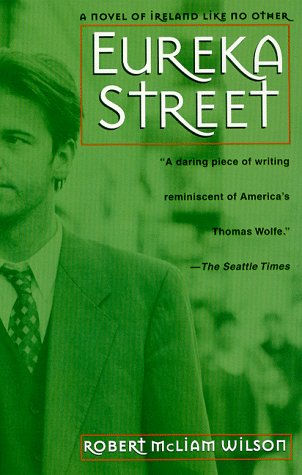
Eureka Street - Robert McLiam Wilson

*** I liked only half of it 

It is undoubted that McLiam Robert Wilson knows how to write well. He manages to engage you fully in the reading. Unfortunately this has the effect of transmitting you both positive and negative aspects of what you read. The identification is such that, when you are told in great detail what happens to the bodies of the victims of an attack, this bothers you a lot. Similarly, you cannot disregard certain parts of the story that are not credible, because the suspension of disbelief does not always work when you have the impression of being there as well.
All this cannot but affect the final judgment of a work.
I liked it a lot the first half of the novel, because I found it fun and light, although in a tragic background, as if to emphasise the fact that despite the “war” life, with its small and big problems, continues. I’ve also found amusing the characterization of Northern Ireland people, who, as the author says, Protestants or Catholics in the end are all the same and do not realise it.
Then halfway in the novel there was a real trauma. The detail of the violence reminded me of scenes from “The Final Destination 3D,” which is not exactly a merit. This disturbed me a lot and at other times I would probably put the book aside, because the desire to read had passed.
I continued, however, and the story is partly returned to the previous tone, but at the same time increasing the distance between the two main characters: Chuckie in an incredible escalation goes from loser to famous and on the other hand Jake that instead follows a more plausible path, but decidedly less interesting. 
The two sides clash dramatically. In the end, because I read for fun, I liked the most heartening story of Chuckie, despite its total improbability and despite the fact that the author left it slyly open at the end, because he had exceeded the limit and going on would lead to no good.
That of Jake is instead a story marked from the outset with an absolutely obvious and banal ending, disguised as a twist.
I also appreciated the stylistic choice to use two points of view in the narrative, although the fact of physically separate from one chapter to another, without adequately specifying it, is a bit confusing, especially in the beginning.
In any case it was an interesting read, especially for those like me who have been to Belfast, but long after the end of the Troubles and therefore find it difficult to compare their own memory with what told in the book.
A good soundtrack of this story would be the song “Take Back the City” by Snow Patrol, dedicated to Belfast.

Eureka Street: A Novel of Ireland Like No Other on Amazon.com.

Learn to tell a story, not just to write well

There are three main elements, from which a good novel or story springs, even if this is always a subjective evaluation.
The first one is the basic idea, on which the story is created, that is something that makes it special, possibly original (although it is not essential at all), but always unique.
The second one is the writing style, which like the brush strokes of a painter gives colour to the story thus bringing it to the light. It concerns the use of a given language and the tone in which it is used. With the word style I don’t mean, therefore, spelling and syntax, which I take for granted.
The third one is the way it is narrated, i.e. the whole of narrative techniques used in presenting the story to the reader, for example, points of view, plot twists, flashbacks, the red herrings, cliff-hangers, beginning, ending, prologue, plot points and a bunch of other tricks, some of which do not have a precise name, which influence the structure of the story, regardless of the basic idea and the style.

Even if the ideal novel should have a good basic idea, a just as good style and should be narrated in the best possible way, of these three elements, in my opinion, the most important is actually the third one.
Think about it for a moment.
Suppose you have fantastic idea, which no one can resist. Suppose you write with an impeccable style, which is fluid, maybe musical, strongly evocative, and able to enchant the reader.
But suppose you do not know how to use these two elements to narrate it in the right way, choosing the most appropriate point of view, interspersing scenes in the most compelling way, measuring the length of the scenes so that they are neither too hasty or too synthetic, inserting plot elements in the right point that leave with bated breath, trapping the reader through the pages of the book from the first lines or leaving them satisfied when reading the latest ones and so on.
Suppose you lack all this or large part of it. Do you think your book will appeal to the readers? I do not think so.

Now imagine that you have an already heard idea, really not original, you write in an acceptable style, but nothing special, but despite all this you are a real master in building the story. You handle with great easiness the various narrative techniques, you are able to capture the reader from the first words and not let them go until the end. Indeed, as they close the book, satisfied, they can’t wait to read the next one.
It is clear that you have everything you need to make readers love you (and maybe become a successful author).
Maybe the readers (and authors) who are a little more delicate (snob?) would turn up their nose; they will say that you are commercial. The truth is that most readers are not nearly as pretentious as them and you want to reach all of them. Well, the good news is that you have within you the most important thing you need to succeed.

The big bestsellers show us that it is so. I mean both the good ones and bad ones (according to a subjective point of view, as always). Some of them will be able to rely also on the other two elements (idea and style), or at least on the second one, and so be good. Others instead will totally lack a good idea and a good style, or at least the second one, and will be bad. But almost all (there are always anomalies), some more and others less, will be characterized by a solid narrative structure.
Where this is lacking at all, you will have an aesthetically beautiful written text, perhaps with a unique idea, but which fails in the attempt to satisfy the reader, which is its ultimate goal. In the end it is so also for those who say to write only for themselves, but then publish their writings or at least let them be read (so obviously they don’t just do it for themselves).

One can argue that there are past examples of authors who gave a little less importance on the development of the plot, focusing just on style. I could think of Virginia Woolf, in whose books very little happens, but everything is narrated by mean of the beautiful stream of consciousness. In this case, however, I would let you notice that the flow of consciousness is in fact a narrative technique (i.e. it falls more in the famous third element than in the style). And anyway none of us is Virginia Woolf or James Joyce, but most of all we do not live in their time. Readers now look for something different, we must accept it.

This is perhaps a trivial consideration, but if you think about it, sometimes it is put a little aside. The emphasis is very much on style, on the correctness of language, on variety in the use of language, but you forgot that the writer must first of all be good at telling stories.
If this ability is lacking, everything else is useless.

Of course, if this supports an original style, capable of arousing pleasure in reading, but without taking the whole scene (the best style is the one that you do not notice consciously, while you read, because you are too caught up in the story to really notice it), the result will be a great novel (or novella, or short story).

Eventually the least important element is precisely the idea. If you notice it, books constantly feature hackneyed ideas, yet many of them are widely appreciated by the readers. This is because the author that knows how to use their own style and especially the narrative techniques has the ability to take an already heard idea and make it his own, present it again to the reader in a completely new version, able to move much or even more than the first time, in which this has been used.
I believe, indeed, that the best authors are the ones that are able to take advantage of the old ideas, accordingly attracting with ease readers who like them, however producing a written work that can surprise and touch anyone who reads it.

Of course, this matter is much more complex than that, but the reason why I decided to talk about it is because I often stumble across books that have precisely the defect of being poorly told. And I have to say that it is sadly very well-known in Italian authors (i.e. from my country). Not surprisingly, while the books of non-Italian authors, coming from any country, are imported with ease in mine, as in so many others, just because they have this universal element to be well told (again, there are many exceptions), it is not just as easy to see the opposite phenomenon, and when you see it, you can bet that it concerns authors who handle with ease the main narrative techniques.

I honestly don’t know the reason for this Italian lack. The consideration that, however, I want to draw is that, in my opinion, all writers, even the snob ones, who want to become really good at it, instead of fossilise on too many alternative readings, should read these bestsellers and try to understand what in the way in which they are constructed makes them sell.
It cannot hurt; in fact, there’s always something to learn.

This article has been originally published in Italian on Anakina.net.

Are you a writer or an author?

Writing Sunset Roma Italy Italia - Creative Commons by gnuckx While in English you refer to a person who writes and publish books as an author, in the common usage these two words in my country (Italy) are almost synonymous, or alternatively “writer” defines the craft and “author” refers to specific works of a writer.
However, if we take into account their real meaning, the strict and the extended one, the matter is quite different.


I had already briefly mentioned the difference between these two words
in another post, where I was pointing out the wrong expression “aspiring writer”, which has no meaning.
Now I want to get a bit more in detail on this subject. I know that at first glance it may seem boring, but I ask you to follow me just for a few lines and you will understand.


The strict meaning of these two terms is simple. The writer is the one who writes, whatever they write, whether they are novels, short stories, newspaper articles, blog posts, poems and so on. No matter who publishes his works or if they published at all or whether they are complete. If someone writes (whether well or poorly) this person is a writer.
The author is the one who wrote something, that is a writer who has completed at least one of their works.
It goes without saying that the author is also a writer (unless you are using a ghostwriter!), but the writer is not necessarily an author.
The distinction between writer and author, however, can have an extended meaning which refers to the approach of the person concerned in respect of their writing. For a writer/author there are at least two stages: that of real writing and that of promotion of their work (even if it is something distributed for free). In the first stage this person is primarily a writer, in the second one this person is primarily an author.


There are writers/authors who focus almost exclusively on the first stage. They spend much time as possible to produce: write, edit, rewrite, design new works and so on. Instead they devote little or nothing of their time to be authors, because there is someone else who takes care of their promotion or simply because they do not know how to do it themselves and maybe do not even want to learn. Promotion is not something everybody is able do, anyway. It requires preparation and takes away a lot of time.
On the other hand there are writers/authors who, after publishing something, devote much more time to promote it, to reach the maximum number of people with that work, before jumping into a new project. They make presentations, flood the social network with links, write articles, send their books everywhere to be reviewed, attend conventions (the famous ones!), just to name a few. In short, they are very active in the promotional field, sometimes by choice, because the feedback you get in exposing to the world can be very rewarding, and sometimes by contractual obligations.


There is a whole gradation of behaviours ranging from pure writer, holding their works strictly in their drawer, up to non-writing author, usually a celebrity, who uses ghostwriters and therefore is only involved in promoting. In general we can say that almost every writer/author is located somewhere in the middle, but undoubtedly tends towards one of the two ends, maybe instinctively. There is therefore those who prefer to be writers in a broad sense, they love above all what they write and draw from it the utmost satisfaction, and those who prefer the role of author, finding more pleasure in the relationship with their readers. Sometimes you oscillate between these two approaches, depending on the periods. When you focus too much on writing, the moment comes when you need to set it aside and behave as an author. On the other hand, if you stray too far from writing, in the end you feel its relentless recall, perhaps accompanied by a certain fear of not being able to resume writing, after a long break.
But, as I said, you don’t always have a choice.


If you are a successful published author, you are forced to do what the publisher says. You have deadlines with regard to your own writing, you cannot lose yourself in a thousand different projects, because you are engaged in exhausting promotion tours, that take away time and concentration, which undermine your creativity. Yet there are author so fitted in this mechanism who still manage to carry on the two aspects in parallel, by writing in their spare time (in a train, plane, on a bench).
If you are a published writer, but you are not famous, behaving like an author is often not a contractual obligation, but a necessity. Especially if your publishing house is very small, you have to roll up your sleeves and get busy with the promotion, but not all are able to do so. Many took refuge behind the claim that this aspect is not among their tasks and do little or nothing.


The independent author instead has no excuse. They are publishers of themselves, this means that no one imposes deadlines or offers cooperation in the promotional field, but at the same time, if they don’t put effort into writing their works and promote them as much as possible (which also involves learning how to do so), no one will read them. Not to mention that they must definitely have another job, which takes away the canonical eight hours a day for five days a week.
Seen in this way, the challenge of the independent author seems impossible. With no one to encourage them in the writing stage, with no one to handle a minimum of promotion, with no one to take care of cover, blurb, book trailer, press releases and so on, how the hell do you find time for everything?
Yet you can
and if you are good at it, you want to learn and maybe have some talent as a writer, you also get a certain success.


You also have an extra choice. You can concentrate your career on quantity, that is to behave essentially as a writer. For an independent author, in fact, having many titles is important both as a matter of visibility and for the income. If you do not spend as much time promoting as you do with writing, your large production (sold all over the web) is itself a form of advertising. The moment you can “retain” a reader, you keep them close, offering much to read (and therefore buy), thus avoiding they forget about you.
On the other hand an independent author with an already good catalogue is free to give more space to the promotion, that is, to their being the author.
In both cases, the choice is only theirs and, if they manage it in the right way, it can still give excellent results.
The key is right here: the choice.


Personally I love both stages, but in a different way. I learned a lot when I was dealing with music promotion. Although the publishing industry is a very different field, some things turned out to be useful. Moreover I’m an independent author who has just taken the first steps in this field (almost two years in
Italy, but just about to try the English market), after a few years of study, and I necessarily have to be a writer and author at the same time and with the same commitment.
I have to write, produce. Both because it is imposed by my condition of indie, and because I cannot help it. I love being a writer, I love the creative act, pull out of nowhere stories, characters, feelings. But I do not mind the role of author. In the past I have dealt with the promotion of other artists (I mean music), but focusing on yourself gives a very different satisfaction. In the future, however, I hope to arrange in such a way as to leave a little more time to write.
In short, I would like to be more writer than author.


And you, where do you stand? Are you writers or authors?


A previous version of this article has been originally published in Italian on Anakina.net.

Literary blogs and new authors in Italy, and the inexistence of aspiring writers

Being able to read both in Italian and in English is definitely an advantage for an Italian reader, as it exponentially increases the literary material available to them, but it is also for a writer, like me, as it allows them to expand their horizons and get to know completely different realities.
In particular, I’ve realized the enormous differences that exist between the Italian and the English-speaking publishing, which includes all English-speaking countries, and how different the approach of the web is towards it. I’m talking about those which are generically called literary blogs, i.e. blogs that talk about writing, novels, authors, publishing and everything that orbits the literature.
In this scope you can see in my opinion the most obvious differences, not only in the subjects, but also in the way in which they are addressed.
This matter, however, would be too long, so in this post I want to dwell on one of these topics: the new or aspiring published authors, i.e. those writers who have published (also self-published) their first book or are trying to do so.
Reading articles about them, we note first of all that among the Italian bloggers is a widespread tendency to look at them a little from above.
These bloggers look with suspicion at people that approach publishing, already assuming that they don’t have any experience, they are arrogant, they don’t have any kind of talent (especially if they are independent authors), who wrote only that one published (or intended to publish) book and maybe they don’t even know grammar or syntax.
In short, we find ourselves facing a bunch of prejudices.
It is always true that what is unknown is often frowned upon or viewed with suspicion, but sometimes that attitude is objectively exaggerated.
Not to mention the unseemly habit of calling the authors who have not yet (been) published with the unfortunate phrase “aspiring writers”, which I find derogatory, as if to say that it is people who don’t write, but think of doing it sooner or later.
Let’s clear this: you do not become writers overnight. It’s not that one day you wake up and aspires to become a writer, then the next day you start writing. It does not work that way.
We all learn to write as children and some of us, without even realizing it, sooner or later begin to write stories. Others do not. There’s a fact. There is no moment in life in which we aspire to write stories. We simply begin to do it, or not.
Who does it is a writer, who doesn’t do it is not a writer.
The aspiring writer does not exist. There is to be a writer or not.
Rather, you can aspire to be an author in the sense of wanting to complete a writing work. Actually, it is relatively easy to start to write something, it is less to finish it. But when you complete the writing of the first story, or the first novel, or the first script etc ... in fact you become an author.
At this point you may be at most an aspiring published author.
Therefore, alluding to a non-published author with the phrase “aspiring writer” is in my opinion quite offensive, because it seems that you think this person does not write at all, but has only the desire (dream?) to do it, maybe to become famous. But if a person doesn’t write regularly, without any doubt they cannot be a good writer when they decide to do so, because they don’t have the experience.
But a would-be published author, as well as the new author (at their first publication), is anything but a person with no experience.
Surely that novel (published or not) is not the only thing they have written. They probably wrote others, as well as short stories, fan fiction, poetry, and many other things, many of which are maybe bad (the first ones), other better. Behind a new author is a whole world of writing, which perhaps dates back to their adolescence or even before, there are a thousand experiments and attempts, all of which constitute their experience in the field of writing, something that should not be underestimated in any way.
If, after all this, they decide to try the publication of a novel, it is because that’s the culmination of the work done in recent years, fuelled by their passion for the written word. They may still be far from perfect (no doubt), but it is impossible that we are dealing with people who don’t discreetly know the Italian language. And this is already something.
Therefore I say they deserve respect.
Unfortunately what I often see is the attempt by certain “critics” to throw a spanner in the works of this kind of authors. If they have published something, those bloggers are constantly hair-splitters, they try to highlight the flaws, instead of focusing on the positive aspects of the work.
Instead, while addressing anyone who has not yet published (and in this case I am referring to generic articles addressed to “aspiring writers”) they insist on reminding these authors that writing well is difficult, indeed almost impossible, that it is strenuous, that they are not really familiar with the grammar (?), that there are a thousand of thousands of style rules that must be followed, that after writing the first draft they have very little to be happy, because it definitely sucks ... and so on.
In both cases they seek in every way to discourage the writer.
At this point the question arises: why this obstinacy?
The answers could be many. Maybe it’s because these people have fun to criticize others (which is typical of Italians, I’m afraid). Or because they know by heart what you shouldn’t do when writing, but have no idea of what needs to be done (unless, perhaps, they too would write novels and not reviews, wouldn’t they?). Or because, being new or aspiring authors themselves, they feel threatened by the competition? Maybe. Or still they are authors disappointed or deluded by publishing in general so that they cannot help but discourage others to take the same road (like: take up knitting, maybe you have more hopes, or: I haven’t made it and I don’t want that you do).
Surely everyone has their (more or less acceptable) motivation, but certainly they do not help the writers who read them. This annoys them, at best. At worst, it discourages them.
It’s a bit as if to a child, showing you his drawing, you said, “But what is this thing? Do not do this! You’re not really able to draw!”, instead of saying “Bravo!”, that is, appreciating the effort of a person who is growing, avoiding to nip in the bud a passion that could become important to him and especially encouraging him to improve.
Of course I’m talking about writers who can write in correct Italian, and that if they make mistakes, they’re just stumbled on some typos. In all this talk I don’t even take into account those who have some big issues in grammar and syntax and not even realize that.
Just to be clear, I’m not writing this post because I’ve been criticised by any blogger. Actually it’s all the contrary. Moreover, after four best selling self-published books I can hardly describe myself as “new”, not even for my age, sadly. But, anyway, it happened to me to read a lot of sad blogs. And I’m really sorry to notice this problem on Italian blogs, because I love my country and I love being Italian (though not as much as being Sardinian).
Now, in this regard, moving to the English-speaking area, the differences are immediately noticeable. The so-called literary blogs, first of all, are almost always held by authors, that is, people who write books and writers who want to share with others what they have learned from their experience. The aim is obviously to be known and to be appreciated, to find new readers and sell more books. It’s understandable.
The result, however, is not only pleasant but also useful.
These blogs are inexhaustible sources of inspiration to learn more about all aspects of writing, both in terms of the word itself (so the style) that the real ability to tell stories, that is the narrative structure. By reading these articles you really learn a lot of things, even if you write in a different language (like me).
Beyond the exceptions, which exists (thank goodness), my question is: why this difference between the Italian and the English-speaking web?
Honestly I’m still trying to figure it out, but I certainly know which of the two I prefer to refer to.


A previous version of this article has been originally published in Italian on Anakina.net.

A Black Englishman - Carolyn Slaughter

***** An almost impossible encounter between cultures

This book is described in a somewhat misleading way and it was only after reading other reviews that I decided to read it. It is not at all the usual romance novel, and it is not characterised by a eroticism in its strict sense (in the scenes shown the main characters do almost nothing but talk!), but it is a story of the encounter between two very different cultures set more than ninety years ago, with all the difficulties that this entails.
Isabel is a rich Englishwoman, married to a soldier serving in India, who begins a relationship with an Indian doctor, educated in England and with strong ties to that country. The main problem against which their relationship hits is the one related to their different race, not so much for them but for the world around them. The events take place during the final stages of British domination in India and offer a poetic and at the same time ruthless insight of this country and the historical period.
The love story itself is very nice, even if it is hard to believe that in reality a devotion of this kind, so unwavering and without hesitation, could be possible, given the impossible challenges it has to deal with, but it is perhaps the only certain thing in a story full of uncertain factors, sometimes very violent ones. The style of the author is so addictive to give a full idea of the drama of certain moments together with the adventurous aspects. A sense of anxiety pervades the reader as the story moves toward its final part, requiring them to keep reading. You get to hate some characters, the terrible stories that are reported, not just those of the protagonists, and even India and England.
A bit unusual choice is to embed all the dialogues inside the rest of the text. This creates confusion at times, but it is a valid device that allows the protagonist, from whose point of view the whole story is told, to bring the facts to which she hasn’t assisted through the words of other characters and do it in a very effective way. It almost creates shifts in the point of view, without notice, that allow for a broader view of the story.
Remarkable is also the evocative power of the scenes, rich in powerful metaphors, capable of generating vivid images in the reader’s mind. You almost have the impression to perceive the smells, even unpleasant ones, the sounds, the colours of India itself, as you receive all the feelings, both positive and above all negative ones, related to abuse, torture, killings.
I do not like stories with a sad ending, in fact I hate them. The fact that it was listed as a romance novel made me hope, but I admit I feared the worst with the pressure of events. Luckily I was denied, but this has left in me the remembrance of a strong emotion that only good books can give: that one of having experienced first hand the story.
I want to make a small mention to one of the best characters of this novel: Joseph, the servant of Isabel. Although this is not one of the protagonists, his role is crucial and his evolution, the way in which he reveals to the reader, make him one of the most beautiful characters in which I have ever come across in a book.

A Black Englishman on Amazon.com.