Showing posts with label Living. Show all posts

New year, new resolutions: 2025 (for the last time)

This year, the traditional article about new resolutions may be less interesting than usual. In fact, I only half-finished or nearly half-finished several things I intended to do, while I forgot about others along the way. However, I am experiencing this end of the year more peacefully than the previous one. I feel generally more satisfied with what I’ve done in the last twelve months, although I’m not sure exactly why.


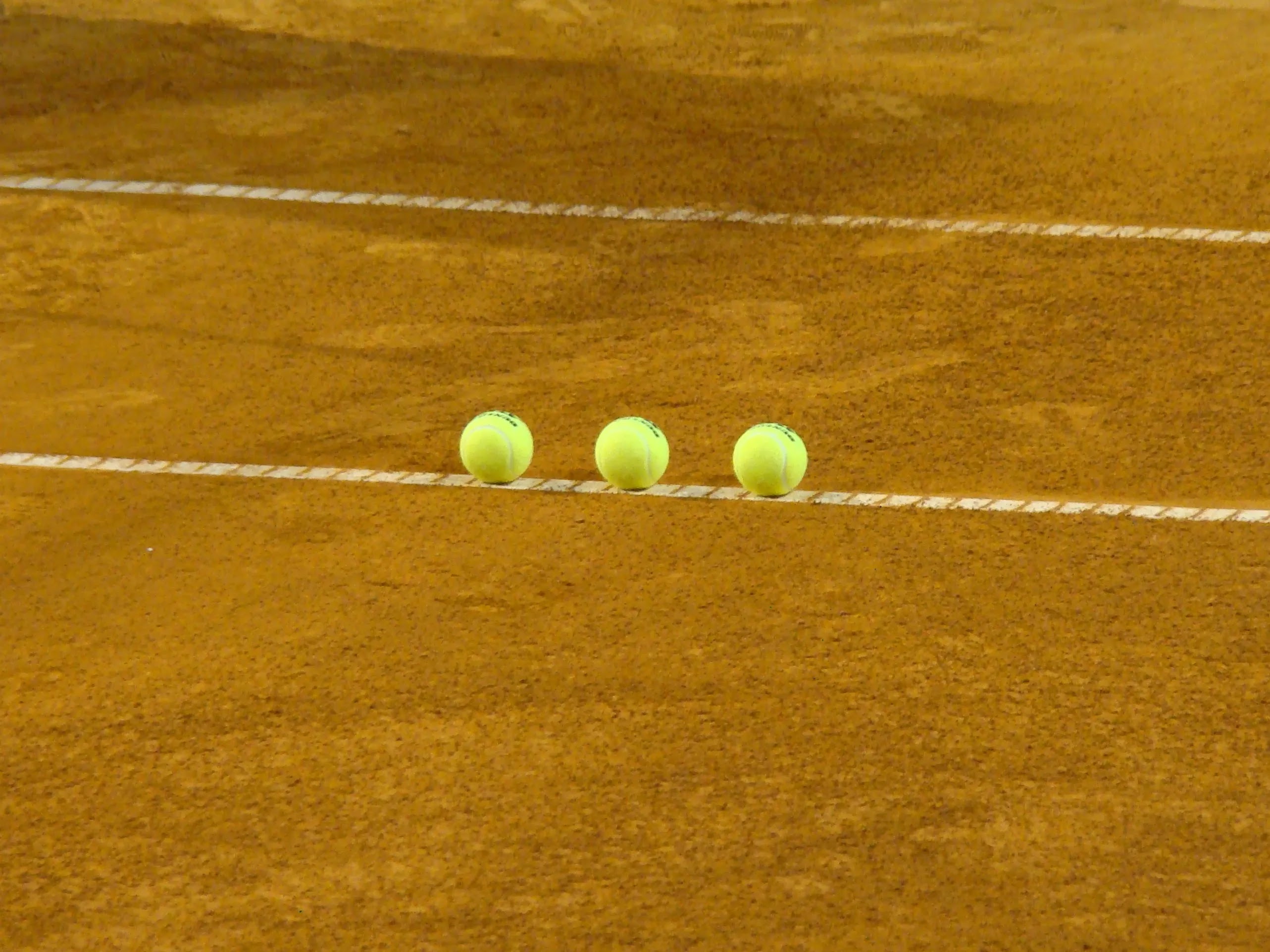
I suspect that the recent holiday in Malaga (in November), the positive results of the Italian tennis during this year (these two things are related, as you can read in one of my latest articles) and the fact that in this last month I have been doing physical activity consistently are among the main reasons of this sense of satisfaction.

In general, regardless of the results, what satisfies me the most is being able to always do what I set out to do, crossing out with a red line every day all the items on my to-do list. And for some time now I’ve been managing to do so.

But I admit that, as soon as I started rereading last year’s article, I almost felt guilty: in this 2024 I achieved much less than in 2023 (in which I published and promoted two books in English) in the publishing field and I did not complete the very few resolutions I had listed.

And yet, thinking about it, I say to myself: does it matter?


What did I end up doing in 2024?

In the publishing field, I have finally completed and put online the new version of my website (in Italian): www.anakina.net.

I’d been working on it for many months and I really like how it turned out, both because it is much more usable on all devices and because, thanks to the slightly more logical way in which I structured it, it is now easier for me to keep it updated and possibly expand it with other sections, if there was the need.


I also managed to create the new version of the mini-site of “Deserto rosso e il Ciclo dell’Aurora”: www.desertorosso.net.

I am particularly proud of the result, both from an aesthetic and usability point of view.

Instead, I haven’t yet started working on the English version of my site. I know it will be quite simple, since I can start from the Italian one and adapt it, without having to structure it from scratch, but so far I haven’t done it, partly because I don’t fancy to, partly because I don’t think it makes sense to dedicate time to it until I have finished the revision of all the books in English.

And here we come to another thing I did: I completed the revision of the third book of Red Desert, namely “Invisible Enemy”, which is online with a new version. So I got to work on the fourth, “Back Home”, but alas I haven’t finished it yet. I’m going very slowly, dedicating about an hour a week to it, when things go well. I’ve reached the penultimate chapter anyway. Well, I’m starting to see the light at the end of the tunnel.

Still on the subject of writing, you may have noticed that I have become more active here on the blog, especially in the last few months. I’ve decided to use what I write (or wrote in the past) on my Facebook page to create new articles in which I talk about the things I like, from books (although this year has perhaps registered my worst negative record in terms of books read) to TV series, from films to music, obviously passing through tennis.

From my Facebook posts, articles are created that end up on my Italian blog and that then, after having translated them, I publish them in English on Medium, then on Substack (where I manage one of my mailing lists in English, so you can get them directly in your inbox) and finally on this blog. And everything gets reshared on other social networks.

Additionally, I’ve added two more articles to the Self-publishinglab blog (in Italian). I would like to write more, but I struggle to find any interesting and original topics to explore further, that is, not something everyone is already talking about.

I have also written a short series of articles in English on a publication available on Medium, called Babel, relating to my work as a professional translator, in which I talk about how I became one (Why I Am a Translator) and how it works (What is Translation? and Use of Translation Software).
If you want to read them, you can find them here, here and here, if you are a paid Medium user, or here, here, and here, if you aren’t.


And, speaking of my work as a freelance translator, I have also updated the website of my sole proprietorship, Anakina Web: www.anakina.net/translations.
As you can see, it is still a subsite of my main domain.
It was something else I had to do, and I managed to get it done.

By the way, this year I had quite a bit more work than the previous one. I suspect that this is also one of the reasons for my satisfaction at the end of the year and, at the same time, why I achieved less in the publishing field.

After all, days are 24 hours long for everyone and in any case it’s not so bad when a good number of those hours correspond to a certain economic return, don’t you think? Especially when there is a close correlation between the amount of work done (specifically, the number of words I translate) and this economic return. Let’s say that we face them with a completely different attitude!

And, staying on the subject of languages, during the year I continued to constantly brush up on my German, adding to the review of an old De Agostini course and the reading of two books, also an advanced course by Assimil. I try to dedicate at least half an hour a day to it and, as time goes by, my understanding is getting better and better, as is the hope of bringing it back to the level it was at about twenty years ago.

On a personal level, there are several things I am satisfied with.

I’m doing physical activity more consistently. In this month of December, when for a few years now I find myself having more time than usual, I managed to do 20 one-hour training sessions. I already know that in January I will have to cut this number probably in half, but that’s okay.


This year I managed to take three short holidays. In April, my partner and I spent a few days in Naples, while in May we visited Nuremberg. Finally, in November, as already mentioned, we went to Malaga. We had already visited the city during a cruise 15 years ago, but this time we were there for something else, namely the final of the Billie Jean King Cup (I took the risk of buying tickets hoping that the girls would reach the final, and I was lucky!) and the quarter-finals of the Davis Cup, Italy-Argentina.

And, still speaking of tennis, in addition to this experience in Spain, we replicated that of the ATP Challenger 175 in Cagliari, the Sardegna Open.

Well!
Now that I have taken a look again at my few resolutions shared a year ago, I realise that I partially completed the first, that is, I updated my Italian sites. Unfortunately, I haven’t done the same for the English ones, except for the minisites dedicated to individual books or series (like www.reddesert.net, www.anakina.net/ericshaw and www.anakina.net/kindred), but all in all I can’t complain, because most of the work is done.

I am consistently pursuing my second resolution, that of doing physical activity and brushing up on my German.

As for the third, that is, finding myself in a situation where all the pending commitments were wrapped up, and I could ask myself what I would do next, well, we’re not there yet at all!

If I go back and look at my famous to-do list, which I mentioned last year, I notice that the deleted items have gone from 18 to 22. It’s not a great improvement, but it’s better than nothing.


Instead, what are my resolutions for 2025?

Aside from continuing to train my body and mind (with German and other foreign languages, but possibly also with other topics), here they are:
1.       Finishing the review of “Red Desert – Back Home”. I’m almost there.
2.       Updating the English version of my website with the new design.
3.       Updating “Self-publishing lab. Il mestiere dell’autoeditore” with the latest news from the self-publishing market. The previous update was in May 2023, so it’s time to revisit it. This isn’t a very demanding job, since I already have a list of changes to make. I just need to put some time into it.
4.       Moving on to another big item on that famous list. If I complete points 1 and 2, I will indeed be forced to do so. I already have a clear idea of what it will be, but I prefer not to anticipate anything.

Also, next year, I should write something new or, alternatively, translate into English some other of my books (probably “Per caso”, which will become “By Chance”).
My choice will depend on an external event totally unrelated to my publishing activity. It’s a bit of a way to avoid having to make that decision.

Writing, however, does not mean publishing. I don’t want to put that kind of pressure on myself. If I write, it will be a way to see if I still have the desire to try something longer than a series of articles, whatever comes of it. It will help me understand where to direct my future efforts and where not to.

There are also a number of other things I would like to do in 2025, even if they are not real resolutions.

As you know, I am a biologist, but I have not practised the profession for many years. My interest in biology has never disappeared and here and there it has popped up in my books, both in thrillers (forensic science) and especially in science fiction novels.

While I was writing the latter, I found myself delving into astrobiology (that is, the branch of biology that studies the emergence of life and the possibilities of life outside of Earth), also because one of the main characters in my books, Anna Persson, is in fact an astrobiologist/exobiologist (the two terms are essentially synonymous).
In 2014, I also followed a MOOC on the topic, held by prof. Charles Cockell of the UK Centre for Astrobiology (based in Edinburgh). Since I received as a gift for Christmas, among other things, two books on astrobiology, including one by Cockell based on his university course, I want to take this opportunity to delve into the subject in a more detailed way.

Another thing I would like to do is listen to more music.
I have always been passionate about music. For a period of my life, in the 2000s, I also dedicated myself to singing. For a few years now, however, I’ve limited myself to putting it in the background while I do something else. I hear it, but I don’t listen to it. I’d like to get back into the habit of occasionally taking some time to listen to an album from start to finish.

Finally, I want to take care of not only my physical health, but also my mental health. I no longer have the patience or desire to put all my energy into a single project. I need to diversify.

I made myself a new program on how to make the most of my work days without stressing myself out.
Being a self-employed person means having to find new ways to maintain some discipline, and that’s difficult to do when you feel under pressure. The fact that I have been in this situation for twenty years now, in reality, does not make it any easier, since my mind resists the infinite repeating of certain routines. It doesn’t matter if they seem to work at first: at some point something breaks, and you have to come up with new methods to trick your mind and avoid a stalemate.

My goal is to try to eliminate or at least mitigate the sense of anxiety with which I wake up every day at the thought of the to-do list (regardless of the number of items), which ultimately affects my productivity and does not allow me to live the day peacefully, even when this depends only on commitments over which I have control.


Maintaining this peace of mind and minimising the causes of self-inflicted anxiety is essential, so that I am ready to welcome any interesting opportunities that may present themselves to me.

I don’t know if I’ll write another one of these articles at the end of 2025, that’s why I indicated in the title that it’s the last time. It’s one of those superfluous commitments that I find myself with in the last days of the year, when I have so many other things to do. In short, it’s another one of those causes of anxiety that isn’t necessary at all. But I will certainly continue to tell you in these pages what I do throughout the year.
If you want to stay updated, subscribe to the blog’s push notifications!

I conclude by thanking you once again from the bottom of my heart for your support. I hope 2025 gives you everything you wish for.

As usual, I would be happy to read your 2024 analysis and your resolutions for this new year. If you like, leave a comment here or on my profile/page on various social networks.

Have a good end and a good beginning!


All photos are © 2024 Rita Carla Francesca: 1) me in Nuremberg; 2) me in Sardinia (my land); 3) Matteo Berrettini and Jannik Sinner during Davis Cup in Malaga; 4) me at the same event; 5) me on Christmas day.

I’m a tennis addict

 I might add: and I’m proud of it!

Sardegna Open 2023, Cagliari (Italy), picture by ®Rita Carla Francesca Monticelli


No, wait, this doesn’t mean I play tennis. I have never played tennis. My father tried to teach me something when I was a little girl, but then, due to lack of time, I didn’t continue.

No, I don’t play tennis. I like watching others do it, especially good ones.


I discovered this passion of mine only a few years ago. In the past I watched this sport with curiosity, but only every now and then I had the opportunity to watch a match, also because it was objectively more difficult to catch one on free-to-air TV in Italy before the arrival of SuperTennis (the FITP - Italian tennis federation - channel). But every time, I was hypnotised by that ball that went back and forth on the court and by the prowess of those guys and gals who hit it.


This probably comes from the fact that my father played when he was young and there was a court right in our apartment block, so it wasn’t uncommon to find some used tennis balls among my toys.

But then I concentrated on football, on supporting Cagliari (the team from my city), which I still do.


Then came the pandemic, and tennis, being a non-contact sport, was one of the first to resume. So I started following it more consistently, and in a short time I was hooked.


There are many things I like about tennis.


First of all, the fact that it’s physics in action: that ball goes there because it was hit a certain way.


Secondly, it is an extremely psychological sport. There are shots, talent, fitness, tactics, but what can make the difference is how the player feels in that moment. It takes very little, almost nothing, to change the inertia of a match just because the player feels confident in his abilities or loses this confidence. Mental strength, which allows you to forget your own mistake or an opponent’s feat and start playing as if nothing had happened, can prevail over the rest.


Also, tennis matches are like thrillers. Sometimes all it takes is an episode, perhaps a lucky one, a twist, which can decide the fate of a game and create the conditions to overturn the result. It’s never over until it’s over. A player can be on the brink of the abyss, three match points down (even more, if it’s a tie-break), and cancel them, then win the set and ultimately win the match. Anything could happen.


And then there is everything that happens off court: the preparation, the planning of the season, the commitment of the players, the ambition, the ability to improve oneself to become stronger in all aspects.


The best thing is to see players who, from the beginning of their career, achieve their first successes, accumulate points, and slowly rise in the ranking, measure themselves against the great and then perhaps become like or better than them.


In all this I find inspiration.


Finally, tennis has the peculiarity of being practised all year round. With the exception of December, every week there is at least one tennis tournament from the major circuits (ATP and WTA) and, with all the Italians, both men and women, achieving excellent results in this sport, this means that there is always a match worth watching. I often have breakfast in front of a match on TV, perhaps after getting up early so as not to miss it, given that the tours touch all continents. In a way, it’s comforting to know that I can watch something I like even every day if I want.


Initially I did it every now and then, but then I started to get to know the players better, their stories, and become passionate about their game. Now I find myself organising my life, both daily and concerning my scheduled commitments, including any holidays, in such a way as not to miss the tournaments that interest me.


And, sometimes, one of my holidays is nothing more than a trip to go and see a tournament, and then while I’m there, I also act as a tourist.


I admit that being self-employed makes things a lot easier for me! If I had fixed work hours, it would be a big problem to see a match in the morning and afternoon or, even worse, during the night.


It might seem that tennis takes up time, a lot of time. On the one hand, it is true since sometimes, at the beginning of a big tournament like a Slam, it happens that there are even four or five matches of Italian tennis players in one day, some of which do not overlap and therefore which I can watch. On the other hand, however, having this type of commitment leads me to make better use of my time.


Having a limited number of hours available to work on something, rather than generally the whole day, pushes me to be more disciplined because I will be able to get my reward afterwards. For example, now that I’m writing this article I’m waiting for a TV match to start and this pushes me to write quickly, instead of sitting there thinking about it a lot or, worse, messing around on some social network!


But it also helped me review my priorities. I realised that I often dealt with unnecessary things more out of habit than out of real interest (now lost). Indeed, in the end they made me feel unnecessarily dissatisfied, since it no longer gave me pleasure to do them and at the same time they did not lead to the desired results. Much better to leave them aside and watch a bit of tennis, to find the good mood (especially in case of victory!) necessary to face my duties and new stimulating challenges.


But I have to admit: tennis is addictive. I notice it when I don’t have any matches to watch for a couple of days. Not to mention in December! But in that case at least, I console myself with figure skating on ice.


Anyway, it is a nice addiction, one of those without side effects.

Okay, now I really have to go: not only has the match started, but I wrote the last sentences during a changeover!

A space weekend in Turin

In October 2018 I had the opportunity to participate in the second edition of the event titled “Signs and Voices of Other Worlds” organised in the headquarters of ALTEC in Turin. It was a fantastic experience during which I was busy for two days in what is defined The Italian Gateway to the International Space Station, as stated in the huge inscription at the entrance, and allowed me to meet many interesting people, as well as talk about my work.

The event itself, the one open to the public, lasted only one day, 14 October, but we (my partner and I), as exhibitors, also went to the headquarters of ALTEC the day before to prepare our booth. It was the first time I attended an event like this. It was nice to arrange all my science-fiction books (eight titles in several copies) on a table, along with other promotional stuff, but also to view in advance the scale model exhibition, which included really extraordinary works of art.

In addition to this, we had the pleasure of making a short private visit to the factory together with Paolo Navone, who led us to see, among other things, the control room, the replica of a module that is part of the ISS and the pool used for astronaut training, and who guided us, explaining the role of ALTEC in the construction of the space station and other international space missions. Among these is that of the ESA IVX mini shuttle, to which Paolo himself participated.

The day ended in a beautiful dinner together with some people who had organised the event (belonging to CRAL ALTEC and Centro Modellistico Torinese ) and others who would participate. In addition to enjoying the company of Marco Ambrosio (who, together with Paolo, invited me to participate in the event) and his wife, we met some of the modellers, among whom I cannot avoid to mention Sandro Degiani, who led the conversation among the people seated next to him (myself included), and Professor Giancarlo Genta, here in the role of author of science fiction novels. The legendary Giovanni Mongini, called Vanni, Italian author and great expert in science fiction, joined the group, who I had met a few hours earlier at the factory and whom I would find myself in the booth across mine the next day.

And then came the day of the event. The first two hours were the easiest part. I had the opportunity to present my “Red Desert” series in the auditorium as part of the speech called “Female Mars”, moderated by Maurizio Maschio. Along with me there was Giulia Bassani, who presented her novel “Ad Martem 12” (and was also my neighbour at the exhibition).


Both were asked how we came into contact with science fiction and what prompted us to start writing it. I said how I grew up among ET, Back to the Future, Star Wars (hence my nickname Anakina), the Visitors and many other films and TV series that have brought me closer to the genre and how it stimulated my imagination. I had many stories in my mind and at a certain point I realised that the only way to make them real was to write them down.

Immediately after the presentation, I returned to my booth, where I welcomed some of the people who had listened to me in the auditorium and wanted to buy one of my books.

As I said earlier, however, the difficult part would come later. Starting from 11.30 a.m. new visitors entered (they were divided into groups of up to 200 people for two hours each, to avoid overcrowding) who did not know who I was. It was up to me to draw their attention.
I think the phrase I used most often was: “Would you like to take a postcard?
I had with me a lot of promotional postcards of “Red Desert” to offer visitors and I used them to induce people to stop at my booth, so that I could explain them something about my books. Keep in mind that I gave away 54 postcards and for most of them I stopped a person so that I could tell them the beginning of the story of Anna Persson and the structure of the Aurora Saga. I repeated it so many times that my other neighbour, Roberto Azzara, learned it by heart!
I must say that my effort was repaid and I managed to sell more than half the books I had with me. And so I also avoided having to send them back to Sardinia by post.

Throughout the day (the event lasted from 9.30 a.m. to 8 p.m.) I had the opportunity to talk with a lot of people and among these I found myself in front of an unsuspecting reader, who, only after seeing the covers, recognised my books and realised he had in front of him the author of the e-books on his mobile phone. It’s the first time that I happen to come across one of my readers by chance and it was really nice to meet him.
That’s not all. A colleague of mine from Turin also came to meet me: Luca Rossi, independent author of science fiction and fantasy, who is my friend on Facebook since 2012 and who I finally managed to meet in person. I was also delighted to meet Dario Tonani (also a science fiction writer and long time friend on Facebook) and his wife Giusy again, whom I had already met at Sassari Comics & Games 2015.

In all that chitchat and after taking some photos with my booth’s neighbours (Giulia, Roberto and Vanni, which I mentioned before, and Luigi Petruzzelli of Edizioni della Vigna) the hours flew, interspersed with some short breaks to admire and photograph the scale models exposed, and go to observe the Sun and then the Moon at the telescope, thanks to the observation posts set up by Celestia Taurinorum.

In the end, tired but happy, we left. The next day, waiting to take the flight that would take us back to Cagliari, at the Caselle Airport we came across the actual ESA mini shuttle XVI, exposed in the check-in area. A souvenir photo with the spacecraft was the worthy closure of this beautiful weekend.

I take this opportunity to thank once again Marco Ambrosio and Paolo Navone, who invited me to participate in this event. Thank you so much!

Photos (from above): during my speech together with Maurizio Maschio, my booth, entrance of ALTEC, view from inside the replica of a module of the ISS, with Luca Rossi, on Mars (more or less) with Giulia Bassani.
You can see more photos, including those of many scale models on display, on my Facebook page at this link.

Colonising Mars for real

I had fun writing a science fiction series about the colonisation of Mars, but some people are really thinking of putting in place such a project in just ten years.

I’m talking about Mars One, the foundation led by Bas Lansdorp, which completed the application stage for the selection of possible future inhabitants of the Red Planet a few months ago.
Mars Initiative, the non-profit association of which I’m an Italian representative, is keeping an eye on Mars One. The purpose of Mars Initiative is to raise funds to be delivered to first project that will bring humans on Mars and, at least from its premises, Mars One seems to be the closest to realisation, if only for the fact that it identifies year 2023 as landing date of the first settlers, that is about ten years earlier than, for example, the smoky intentions of NASA.
But let’s see first of all what it is.

Mars One expects to select, among all those who have applied, the astronauts that will be sent in the number of four every two years starting from 2022. Obviously these will be first subjected to a lengthy training. Between 2016 and 2021 satellites, rovers and habitats will be sent, ready to receive the first four settlers. In 2033 twenty persons will be already living on Mars.
The idea of Mars One, beyond the technical problems still to be solved, is quite simple and its simplicity is guaranteed by the absence of a return trip, which reduces costs and gives the entire project a greater charm. We talk, in fact, of populating a new planet other than Earth. The historical, technological and scientific implications are immense.

But how much is such a venture feasible from the human point of view?
The two men and two women sent to Mars will surely be well selected and well trained, but it is not really possible to prepare them for what awaits them. The reason is simple: nobody knows it. They will be the first to discover it.
Those who are chosen will enter history, become famous, but would never enjoy their being a celebrity. In fact, they’re going to live for the rest of their life in the midst of a desert, imprisoned in their habitats, in their suits or their rovers, without ever really being outdoors, knowing for sure that they will never return.

What happens if they do not get along? If one or more of them has a nervous breakdown? If they get ill? If they no longer follow the rules?
Especially at the beginning, when they are only four or eight and the isolation is something tangible (on Mars it is not even possible to communicate in real time with Earth), some problems will certainly arise. And it is not said that the increase of the population can solve them. The element that perhaps might be more difficult to accept is that there is no possibility of rethinking. If you don’t adapt, for whatever reason, you cannot return to Earth.

This certainty personally terrifies me. I think in a sense that a person who accepts this certainty is a bit crazy (in a good way). But I wonder how that person could become at the time when this idea is turned into reality.
The idea of spending the rest of my life on Mars had struck my imagination many years ago, when there was no Mars One, but I read an article on the web which presented such an initiative as something destined to become true sooner or later. Just that little I had read, along with the ideas spread by Robert Zubrin on the subject of the colonisation of Mars, are the basis of my sci-fi series “Red Desert”. Only after publishing the first book in Italy I discovered about the existence of Lansdorp’s foundation and this has renewed in me a certain sense of disquietude against such a project of colonisation. In fact, imagining such a thing in a novel is quite different from seeing it in reality.

I don’t know if Mars One will become a reality so quickly, because time is tight, anyway I hope the landing of man on Mars will happen as soon as possible. Although I would never want to be part of those brave (and crazy) people, I would really like to see such an achievement for mankind in the course of my life.


The following video was used by Mars One during the application campaign. Isnt it stunning?

A previous version of this article has been originally published in Italian on Anakina.net.

Are you a writer or an author?

Writing Sunset Roma Italy Italia - Creative Commons by gnuckx While in English you refer to a person who writes and publish books as an author, in the common usage these two words in my country (Italy) are almost synonymous, or alternatively “writer” defines the craft and “author” refers to specific works of a writer.
However, if we take into account their real meaning, the strict and the extended one, the matter is quite different.


I had already briefly mentioned the difference between these two words
in another post, where I was pointing out the wrong expression “aspiring writer”, which has no meaning.
Now I want to get a bit more in detail on this subject. I know that at first glance it may seem boring, but I ask you to follow me just for a few lines and you will understand.


The strict meaning of these two terms is simple. The writer is the one who writes, whatever they write, whether they are novels, short stories, newspaper articles, blog posts, poems and so on. No matter who publishes his works or if they published at all or whether they are complete. If someone writes (whether well or poorly) this person is a writer.
The author is the one who wrote something, that is a writer who has completed at least one of their works.
It goes without saying that the author is also a writer (unless you are using a ghostwriter!), but the writer is not necessarily an author.
The distinction between writer and author, however, can have an extended meaning which refers to the approach of the person concerned in respect of their writing. For a writer/author there are at least two stages: that of real writing and that of promotion of their work (even if it is something distributed for free). In the first stage this person is primarily a writer, in the second one this person is primarily an author.


There are writers/authors who focus almost exclusively on the first stage. They spend much time as possible to produce: write, edit, rewrite, design new works and so on. Instead they devote little or nothing of their time to be authors, because there is someone else who takes care of their promotion or simply because they do not know how to do it themselves and maybe do not even want to learn. Promotion is not something everybody is able do, anyway. It requires preparation and takes away a lot of time.
On the other hand there are writers/authors who, after publishing something, devote much more time to promote it, to reach the maximum number of people with that work, before jumping into a new project. They make presentations, flood the social network with links, write articles, send their books everywhere to be reviewed, attend conventions (the famous ones!), just to name a few. In short, they are very active in the promotional field, sometimes by choice, because the feedback you get in exposing to the world can be very rewarding, and sometimes by contractual obligations.


There is a whole gradation of behaviours ranging from pure writer, holding their works strictly in their drawer, up to non-writing author, usually a celebrity, who uses ghostwriters and therefore is only involved in promoting. In general we can say that almost every writer/author is located somewhere in the middle, but undoubtedly tends towards one of the two ends, maybe instinctively. There is therefore those who prefer to be writers in a broad sense, they love above all what they write and draw from it the utmost satisfaction, and those who prefer the role of author, finding more pleasure in the relationship with their readers. Sometimes you oscillate between these two approaches, depending on the periods. When you focus too much on writing, the moment comes when you need to set it aside and behave as an author. On the other hand, if you stray too far from writing, in the end you feel its relentless recall, perhaps accompanied by a certain fear of not being able to resume writing, after a long break.
But, as I said, you don’t always have a choice.


If you are a successful published author, you are forced to do what the publisher says. You have deadlines with regard to your own writing, you cannot lose yourself in a thousand different projects, because you are engaged in exhausting promotion tours, that take away time and concentration, which undermine your creativity. Yet there are author so fitted in this mechanism who still manage to carry on the two aspects in parallel, by writing in their spare time (in a train, plane, on a bench).
If you are a published writer, but you are not famous, behaving like an author is often not a contractual obligation, but a necessity. Especially if your publishing house is very small, you have to roll up your sleeves and get busy with the promotion, but not all are able to do so. Many took refuge behind the claim that this aspect is not among their tasks and do little or nothing.


The independent author instead has no excuse. They are publishers of themselves, this means that no one imposes deadlines or offers cooperation in the promotional field, but at the same time, if they don’t put effort into writing their works and promote them as much as possible (which also involves learning how to do so), no one will read them. Not to mention that they must definitely have another job, which takes away the canonical eight hours a day for five days a week.
Seen in this way, the challenge of the independent author seems impossible. With no one to encourage them in the writing stage, with no one to handle a minimum of promotion, with no one to take care of cover, blurb, book trailer, press releases and so on, how the hell do you find time for everything?
Yet you can
and if you are good at it, you want to learn and maybe have some talent as a writer, you also get a certain success.


You also have an extra choice. You can concentrate your career on quantity, that is to behave essentially as a writer. For an independent author, in fact, having many titles is important both as a matter of visibility and for the income. If you do not spend as much time promoting as you do with writing, your large production (sold all over the web) is itself a form of advertising. The moment you can “retain” a reader, you keep them close, offering much to read (and therefore buy), thus avoiding they forget about you.
On the other hand an independent author with an already good catalogue is free to give more space to the promotion, that is, to their being the author.
In both cases, the choice is only theirs and, if they manage it in the right way, it can still give excellent results.
The key is right here: the choice.


Personally I love both stages, but in a different way. I learned a lot when I was dealing with music promotion. Although the publishing industry is a very different field, some things turned out to be useful. Moreover I’m an independent author who has just taken the first steps in this field (almost two years in
Italy, but just about to try the English market), after a few years of study, and I necessarily have to be a writer and author at the same time and with the same commitment.
I have to write, produce. Both because it is imposed by my condition of indie, and because I cannot help it. I love being a writer, I love the creative act, pull out of nowhere stories, characters, feelings. But I do not mind the role of author. In the past I have dealt with the promotion of other artists (I mean music), but focusing on yourself gives a very different satisfaction. In the future, however, I hope to arrange in such a way as to leave a little more time to write.
In short, I would like to be more writer than author.


And you, where do you stand? Are you writers or authors?


A previous version of this article has been originally published in Italian on Anakina.net.

Research before writing a book in the Internet era

Anyone who has ever tried their hand at creative writing knows that, at least in theory, before going in front of the white paper, it is necessary to do careful research about the settings, the period described and subject matter in order to create a story that is as realistic as possible, but also to have additional elements to enrich it and make it interesting to the reader.

The professional writers carry out researches in different ways. Some move for a few weeks to the places where their story will take place, others read books on the topics covered in it, and still others interview experts. There are a thousand different ways to do a research. All these inputs, in addition to ensuring a certain mastery of the subject, stimulate the imagination and allow you to develop the story beyond the initial idea.


Certainly doing research in this way can sometimes be expensive. The writer who does not navigate in gold, whether professional or not, often cannot afford to travel the world, does not have the opportunity to meet experts and so on, even for the simple fact that they do not have the time for it (and even time is money).
In the past, however, things were even worse. The writers most of the time were forced to narrate stories related to things they know well or where they lived or based on what they could find after hours and hours of reading in the library, since the possibility to access other information was prohibitive to say the least. And who decided to ignore these limits was forced to rely on their imagination, assuming they had a really vivid one. Just think of
Emilio Salgari, who described in his books those vivid and engaging distant places that he had never seen. His approach was similar to that of the current writers of a certain kind of fantasy and science fiction, arriving literally to create new worlds that they master completely, which prevents them to make huge researches.

But, since the days of Salgari, writers now, whether super-amateurs or bestselling authors, can rely on immediately accessible sources at any time, thanks to the greatest invention of the last decades: Internet.
Now, if we want to obtain information about a topic, we look for it on Google or go directly to Wikipedia, if we want to see a place where we have never been, we rely on Google Maps and Google Earth. In some cases they even allow us to move through the streets of a city and see the details, as if we were there. Or we visit YouTube where we find many videos of documentaries discussing various topics or again, if we need a certain book, we can buy an e-book in just a few clicks. And if we do not have much money to spend, we just rely on the dear eMule (or torrent application), to find what we need, breaking some copyright law.
In short, we have no excuse.


Almost everything is within our reach. This, however, completely changes the approach that we have before a search. We can always do it the old way: reading, watching videos, looking at photos and so on and creating notes, perhaps using little programs like OneNote (or free ones) that will allow us to copy text, images, links, and organize them easily, to find all that when we are in need.


Or we have another choice. We can begin to put in writing, perhaps after some little preliminary research (such as reading a book, an article or watching a documentary, just to get into the subject and capture that particular emotion from which each story takes life) and then, from time to time, when the need arises, we can look for what we need directly when we need it. With a permanent connection to the Internet we just have to keep open a browser together with the writing application and easily switch between them, keeping that emotion always alive and at the same time feeding it with all those immediate inputs, the result of which we can now put pen to paper without fearing that the big idea is lost, because we were not able to fix it as soon as we have come up with it.


This approach is surely not methodical and at first glance it might seem confusing, it is actually based in all respects on the way our memory works, that is associatively, going from one thing to another, rather than linearly.
No doubt the use of such a method requires a certain discipline and mastery of your own means. It is extremely easy to get distracted and start browsing, thus forgetting what we were writing. On the other hand, if you are able to apply it properly, it gives the chance to dive right into the narrative, avoiding the risk that a particular emotion (the so-called inspiration), once every research is done and the plot is organized in every retail, vanishes into thin air, before having been able to take advantage of what was our only purpose, that is, writing.


And if this real-time search leads us to make some mistakes?

Well, what’s the problem? Our words certainly were not etched in stone, but not even on paper. Once the draft is complete, when we are certain that we have fixed all that is running through our minds, there remains all the time in the world to check, correct and change what we have written, whenever we want.

This article is also available in Italian on Anakina.Net.

Were you meant to be a writer?

Some say that they always loved writing and have already started to write short stories or even novels when they were kids, but some came there later through a longer path, sometimes unexpected.
In whatever way it happens, there is a moment when we realize to be writers. Sometimes this awareness is in front of us all the time, but we cannot see it, until one day our eyes open.
Some people, however, despite devoting themselves to writing for a long time, have doubts on whether it is the right path for them.

How do you understand if you were meant to be a writer?
The first thing that makes us understand about it is that, for us, writing is first of all a need. Inside our head are all these plots, these possible characters who want to get out. They press so much that only fixing them in writing is able to calm us down.
If we do not write for a long period, we feel guilty. Sometimes, if we go out to have fun, we think that we could have used that time for writing. When we read a book, we think that we would have written it differently, even better. We want to talk about what we are writing, so we spoil our readers one by one, or we force our partner or friend or relative to listen, as we speak of the development of the plot for the book we are writing. Inspiration pops out at inopportune moments and we know it so well that we do not get scared in front of a doubt about how to continue our story. And if we believe to be a victim of the writer's block, we strive to overcome it by writing.

Are you familiar with some of these feelings?
If the answer is yes, it is very likely that you are meant to be a writer.
Another important element is the ambition, the tendency to make long-term projects involving writing. Maybe we do not declare them, so as not to appear megalomaniacs or for good luck, but in our minds are plans for at least two or three years, if not longer. And the more we can achieve them, however small, the more we convince ourselves that we are doing well.
And if, by chance, we review what we have written in the past, we realize another aspect: we are improving all the time, we are maturing. This is because we tend to refine our art, to be less forgiving towards ourselves and, in doing so, imperceptibly, we come to set ourselves against it in a professional manner.

We get to such involvement in what we do that no matter if, with the royalties of our book, we can buy at most a pizza. We still want the best from what we do. We become perfectionists and this makes us happy in a way that others often do not understand.
There are writers who should be happy to write and those who have to write for finding the stability and strength to face adversity.
Whatever the category we belong, writing is something central in our lives: we cannot imagine ourselves without it.

This article is originally available in Italian on Giulia Beyman's Blog.